Showing posts with label tor. Show all posts

Tuesday, May 5, 2015

20 Horses at the Gate (exhibition) till 10th of May

20 huge horses sculputers made by the mexican artist Gustavo Aceves will stand in front of the Brandenburger tor till the 10th.
Spines, hearts and skulls are mixed together with classical shapes of the horses and although the statues haven't been created for Berlin and the celebration of the 70th Anniversary of the End of the WWII - the connection with the quadriga standing on the top of Brandenburger Tor is absolutely fantastic and works perfectly.

All images are under CC Creative Commons (Attribution, Noncommercial, No Derivative Works), please refer to " darioj laganà | www.norte.it "


Saturday, November 29, 2014

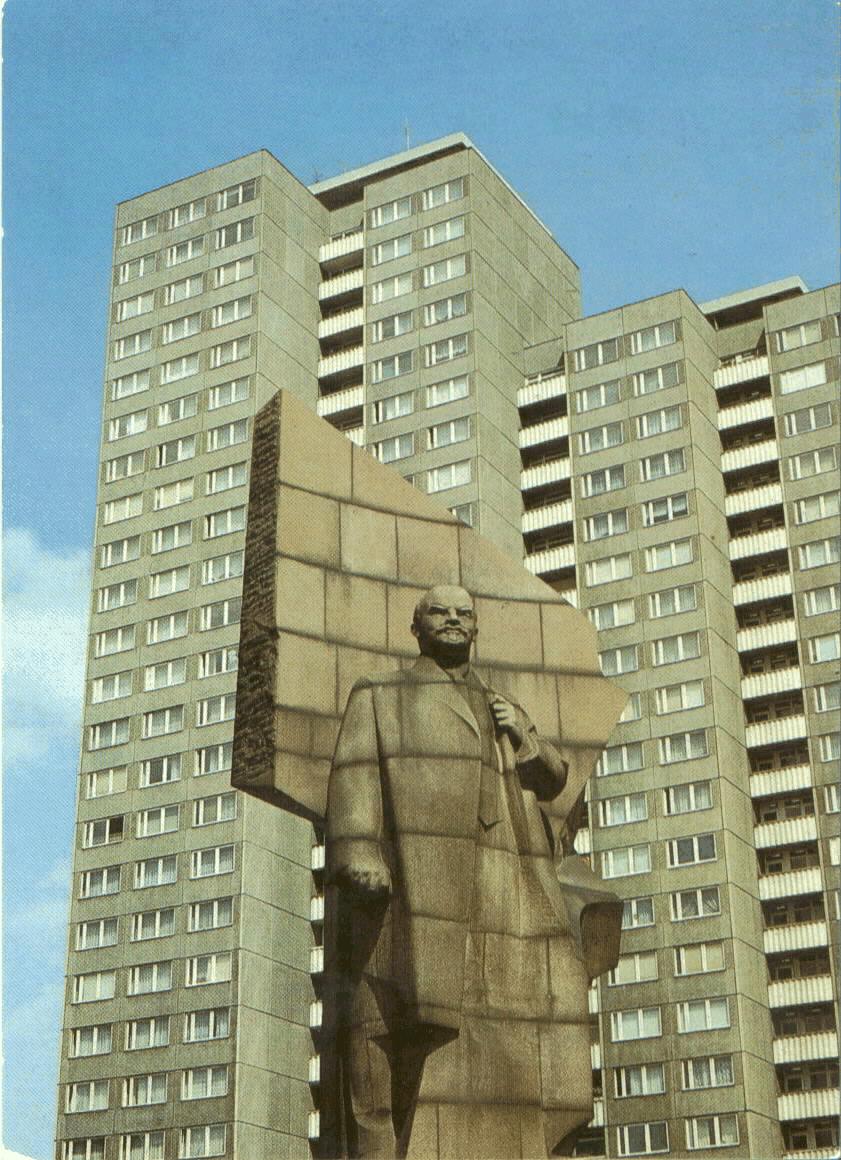
Platz der Vereinten Nationen (Leninplatz)


Today this square (united nations square) looks very simple and quite and without a strong meaning, but before it was Leninplatz.

In the beginning here was standing the Landsberger Tor, then, after the end of the WWII this area was heavely destroyed (with the rubbish they built the 2 mountains of the Volkspark Friedrichshain just behind the square).
On the occasion of the 100th anniversary of Lenin in 1970, a completely new urban district with a newly designed Lenin Square.
The square is one of the outstanding examples of the socialist urban DDR (with one of the tallest residential buildings in East Berlin) and symbolizes the transition of the city with the old buildings on the lower Landsberger Allee with the Friedrichshain Hospital into a modern city center around Alexanderplatz.

The 19-meter high statue of Lenin stood on a circular base, 26 meters in diameter. The monument was made of red, Ukrainian granite.

In 1991 the statue has been removed, the demolition of the entire monument took several months until February 1992. Many people tried to stop the demolition or block at least, so that the work took longer than planned.
The 129 parts of the monument have been buried in the sand pit at Seddinberg at Müggelheim.

More infos: WIKI (german)

All images are under CC Creative Commons (Attribution, Noncommercial, No Derivative Works), please refer to " darioj laganà | www.norte.it "


Monday, April 8, 2013

Charlottenburger Tor

Although Charlottenburg is more famous for its Schloss-Castle, there's still something else still remaing from the time were Charlottenburg was a city and not just a district of Berlin.

Charlottenburg Gate is a Neo-Baroque building erected in 1907 at the behest of the then independent City of Charlottenburg, it was meant as a counterpart to Berlin's Brandenburg Gate.

In the course of the Nazi plans for a new Berlin city (Germania), Adolf Hitler's chief architect Albert Speer in 1937 ordered the Charlottenburger Chaussee road widened to a "East-West-Axis". To enable a continuous view on street level, the bridge was flattened and broadened.

Charlottenburg Gate and its surrounds were heavily damaged during World War II and the final Battle of Berlin, when in April 1945 forces of the Polish 1st Infantry Division, pushing eastwards to the Berlin city centre, fought against retiring Wehrmacht troops.

In 1970, Charlottenburg Gate and its surrounds have been restored in their 1930s position.

More infos: WIKI
Map: http://goo.gl/maps/Xe9Aq

All images are under CC Creative Commons (Attribution, Noncommercial, No Derivative Works), please refer to " darioj laganà | www.norte.it "


Wednesday, December 19, 2012

Frankfurter Tor (Friedrichshain)

Frankfurter Tor (Gate) is also part of the Stalinbau program, started after the end of the WWII by the DDR in Berlin.

The square was named after the 18th century city gate (first made of wood, then by stone) on the road to Frankfurt (Oder), which however was located 800 meters westwards near Weberwiese station.

The design for the building was by architect Hermann Henselmann who emerged in 1953 as the winner of a competition. The idea of the competition was quite strict: people coming from East (Russia and Poland) must have the feeling of an entrance to a monumental city,  always in the idea of a flagship building project of East Germany's reconstruction programme after World War II. (See Stalinbau).
The prominent twin towers were built between 1953 and 1956 resembling the two cathedrals on Gendarmenmarkt.
More infos: WIKI (german)

All images are under CC Creative Commons (Attribution, Noncommercial, No Derivative Works), please refer to " darioj laganà | www.norte.it "