Showing posts with label platz. Show all posts

Saturday, November 29, 2014

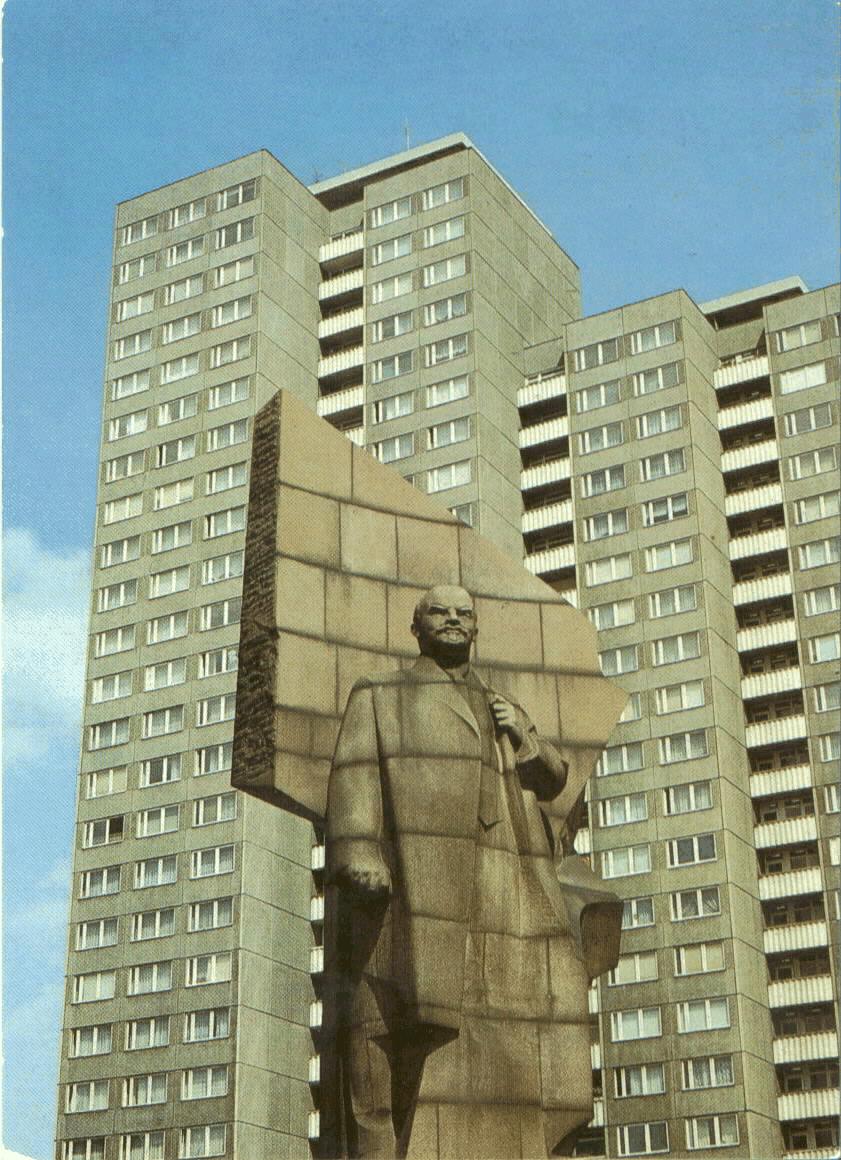
Platz der Vereinten Nationen (Leninplatz)


Today this square (united nations square) looks very simple and quite and without a strong meaning, but before it was Leninplatz.

In the beginning here was standing the Landsberger Tor, then, after the end of the WWII this area was heavely destroyed (with the rubbish they built the 2 mountains of the Volkspark Friedrichshain just behind the square).
On the occasion of the 100th anniversary of Lenin in 1970, a completely new urban district with a newly designed Lenin Square.
The square is one of the outstanding examples of the socialist urban DDR (with one of the tallest residential buildings in East Berlin) and symbolizes the transition of the city with the old buildings on the lower Landsberger Allee with the Friedrichshain Hospital into a modern city center around Alexanderplatz.

The 19-meter high statue of Lenin stood on a circular base, 26 meters in diameter. The monument was made of red, Ukrainian granite.

In 1991 the statue has been removed, the demolition of the entire monument took several months until February 1992. Many people tried to stop the demolition or block at least, so that the work took longer than planned.
The 129 parts of the monument have been buried in the sand pit at Seddinberg at Müggelheim.

More infos: WIKI (german)

All images are under CC Creative Commons (Attribution, Noncommercial, No Derivative Works), please refer to " darioj laganà | www.norte.it "


Friday, May 10, 2013

Nazi book burnings - Bücherverbrennungen (Mitte) - 80th Anniversary


In a symbolic act of ominous significance, on 10 May 1933, the students burned upwards of 25,000 volumes of "un-German" books, presaging an era of state censorship and control of culture. On the night of 10 May, in most university towns, nationalist students marched in torchlight parades "against the un-German spirit." The scripted rituals called for high Nazi officials, professors, rectors, and student leaders to address the participants and spectators. At the meeting places, students threw the pillaged and unwanted books into the bonfires with great joyous ceremony, band-playing, songs, "fire oaths," and incantations. In Berlin, some 40,000 people gathered in the Opernplatz to hear Joseph Goebbels deliver a fiery address: "No to decadence and moral corruption!" Goebbels enjoined the crowd. “Yes to decency and morality in family and state! I consign to the flames the writings of Heinrich Mann, Ernst Gläser, Erich Kästner.”

But this event is one of the special ones, which the city of Berlin is able to celebrate in the middle of hordes of tourists near Unter den Linden, "in the consciousness of guilt, who then loaded representatives of the Evangelical Church through silence and complicity on to the Evangelical Church in Berlin city center district together with the Berlin Cathedral community and other partners".

During the event, the German theater actors will read from the works of writers whose writings have been burned in 1933. A Jewish cantor and choirmaster of the Berlin Cathedral will sing psalms, Bishop Markus Dröge, Rabbi Daniel Alter and the Catholic provost Rother prayers. Jan-Hendrik Olbertz, President of Humboldt University, provides the historical situation.


More infos: WIKI or Auch wir (german)

All images are under CC Creative Commons (Attribution, Noncommercial, No Derivative Works), please refer to " darioj laganà | www.norte.it "


Saturday, November 17, 2012

Berlin in Films

There are a lot of Films which have been set in Berlin and the most famous in this period are related with Ostalgie (nostalgia for aspects of life in East Germany).

Very famous are Der Himmel über Berlin (by Win Wenders), Goodbye Lenin, Sonnenallee and Das Leben der Anderen (The Lives of Others), as well as Lola Rennt (Run Lola Run).


Ostkreuz (very drammatic, directed in 1991),  Sommer vorm Balkon (1994), Berlin Am Meer (2008), Die fetten Jahre sind vorbei (2004), Boxhagener Platz (quite hard to understand for the strong dialect dialogues).


Some of those films will never be translated and will never leave germany, but if you live in Berlin, they can help you to understand where do you live and the history behind this city.

Here there's a complete list: WIKI (english) and WIKI (german)